
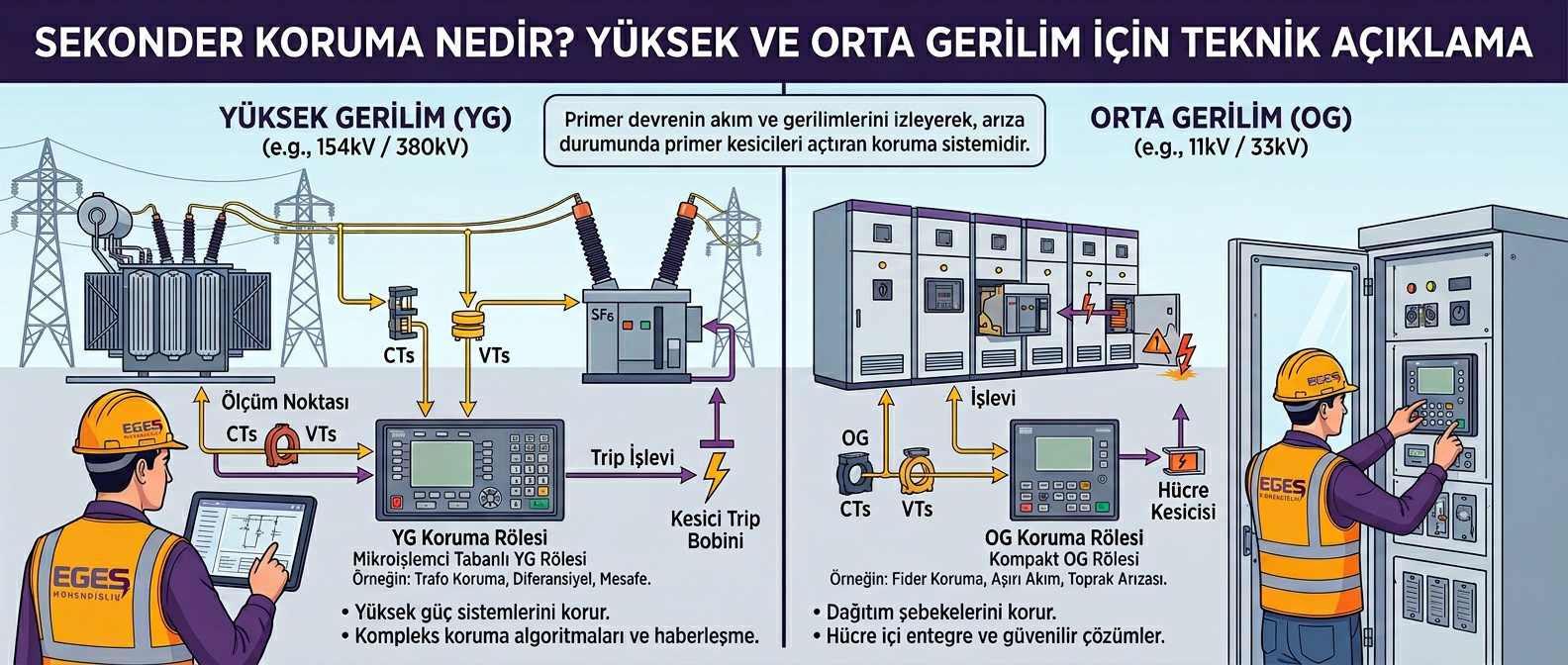
To ensure continuity in electrical power systems and protect expensive equipment from failures, there are two main lines of defense: primary and secondary protection. Especially in high-voltage (HV) and medium-voltage (MV) facilities, the system’s “brain” is considered to be What is secondary protection? We will answer that question in this article.
What Is "Secondary"? What Does "Secondary" Mean?
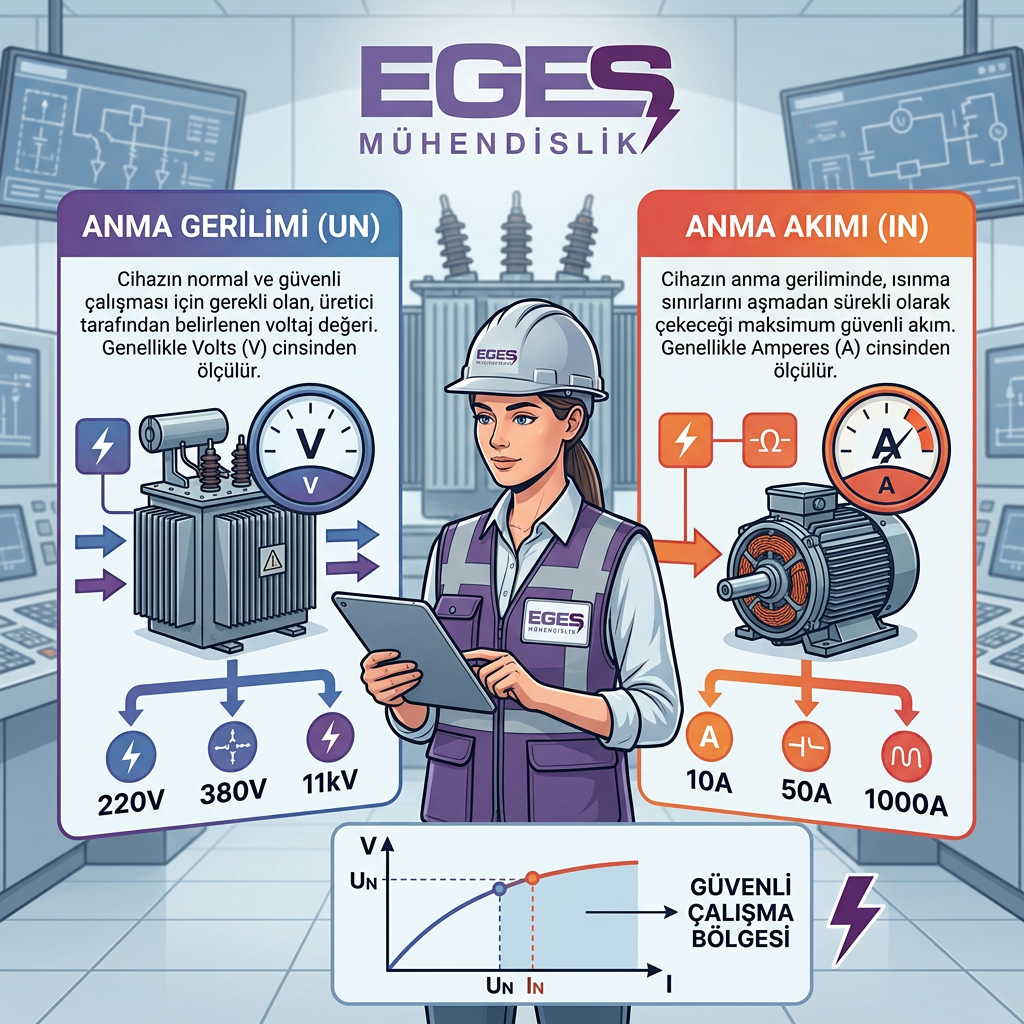
Let's start with some technical terms: What is a secondary?? Literally, it means “secondary” or “auxiliary.” In electrical systems, What does "secondary" mean? The answer to that question is: a low-voltage circuit that is isolated from the main power circuit and is used for measurement and control purposes.
What Is Primary Protection?
To understand the system, you first need to know the basics. What is primary protection?? These are devices that physically interrupt the circuit directly on the main power line. For example, a fuse or main circuit breaker provides primary protection by directly interrupting the circuit when the current flowing through it exceeds the specified limits.
What Is Secondary Protection in YG and OG Systems?
At higher voltage levels, measuring or interrupting the current on the main line directly with a device is both dangerous and costly. This is where What is secondary protection? the question arises:
Data from the high-voltage line (current and voltage) is stepped down via measuring transformers (current and voltage transformers) and transmitted to the secondary circuit. Secondary protection relays continuously monitor these reduced values. If a fault (short circuit, overcurrent, etc.) is detected, the relay sends a “trip” command to open the massive disconnector or circuit breaker on the main line.
What Is YG? What Does YG Mean?
Commonly used in industry terminology What is YG?? YG, It is an abbreviation for “High Voltage.” According to the regulations governing high-current electrical installations, voltages above 1,000 volts (1 kV) fall into this category. So, What does "yg" mean? And why do they require special protection? High-voltage lines (such as 154 kV or 380 kV) carry enormous amounts of energy; a fault here could lead to a massive explosion or a transformer fire within seconds. That is why secondary protection is not an option but a necessity on these lines.
Advantages of Secondary Protection
- Security: Operators can control the system via low-voltage secondary panels without touching the high-voltage line.
- Accuracy: Secondary relays can detect even microsecond-level changes in fault conditions.
- Selectivity: If the fault is limited to a specific area, opening only the circuit breaker in that area prevents the entire facility from losing power.
 Turkish
  English
  German
  French
  Arabic
  Azerbaijani