
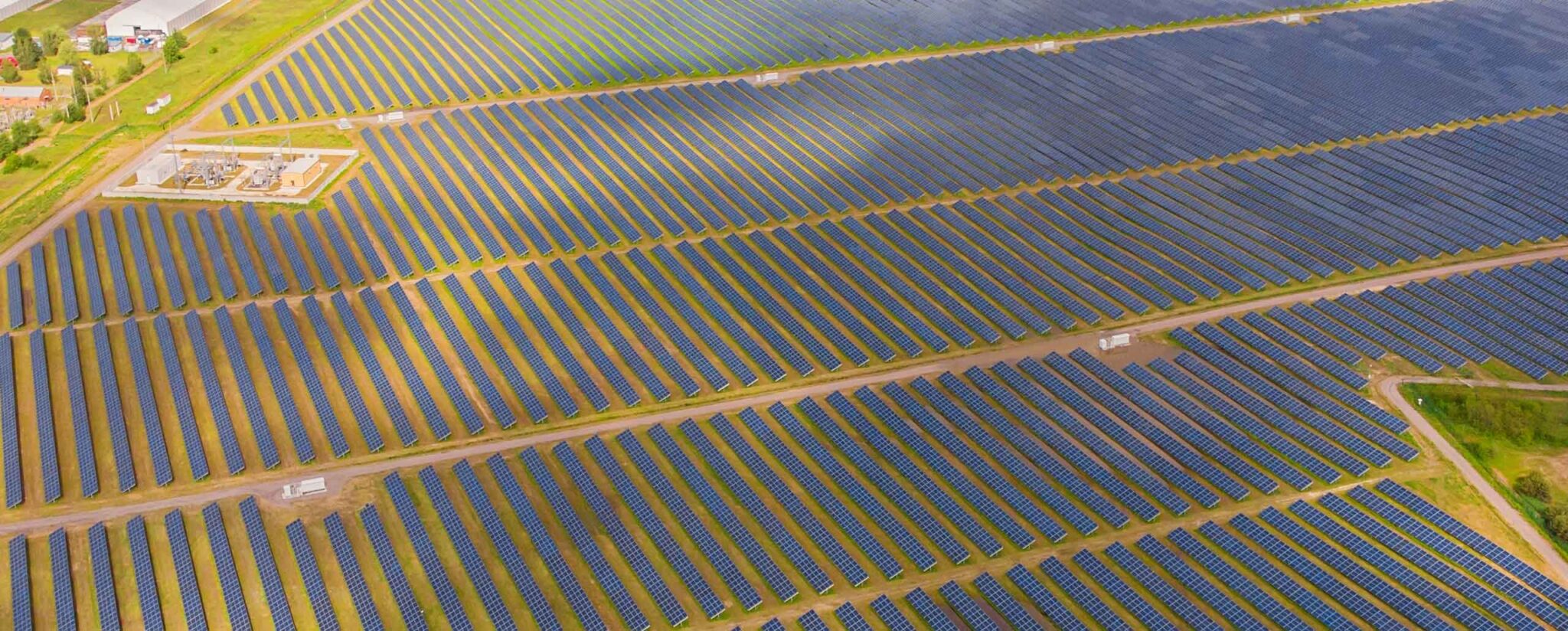
Solar Power Plant (GES) projects involve the construction of facilities that convert solar energy into electrical energy. These projects aim to generate electricity by harnessing solar energy, one of the renewable energy sources. The main components and processes of solar power plant projects are as follows:
Solar Panels: Solar panels, the most important component of solar power plant projects, consist of photovoltaic cells that convert sunlight into electrical energy.
Inverters: These are devices that convert DC (direct current) electricity into AC (alternating current) electricity. This is necessary for transmitting electricity to the grid or to users.
Support Structures: These are the roof or ground structures on which solar panels will be installed. These structures ensure that the panels are positioned at the optimal angle and height.
Energy Storage: In solar power plant projects, battery systems can also be used to store the energy generated. This ensures a steady supply of energy at night or when weather conditions are unfavorable.
Monitoring and Control Systems: Software and hardware used to improve the efficiency of solar power plants and detect malfunctions.
Solar power projects are encouraged in many countries because they provide environmentally friendly and sustainable energy production. They also offer economic benefits, such as reducing energy costs and increasing energy independence.
 Turkish
  English
  German
  French
  Arabic
  Azerbaijani