
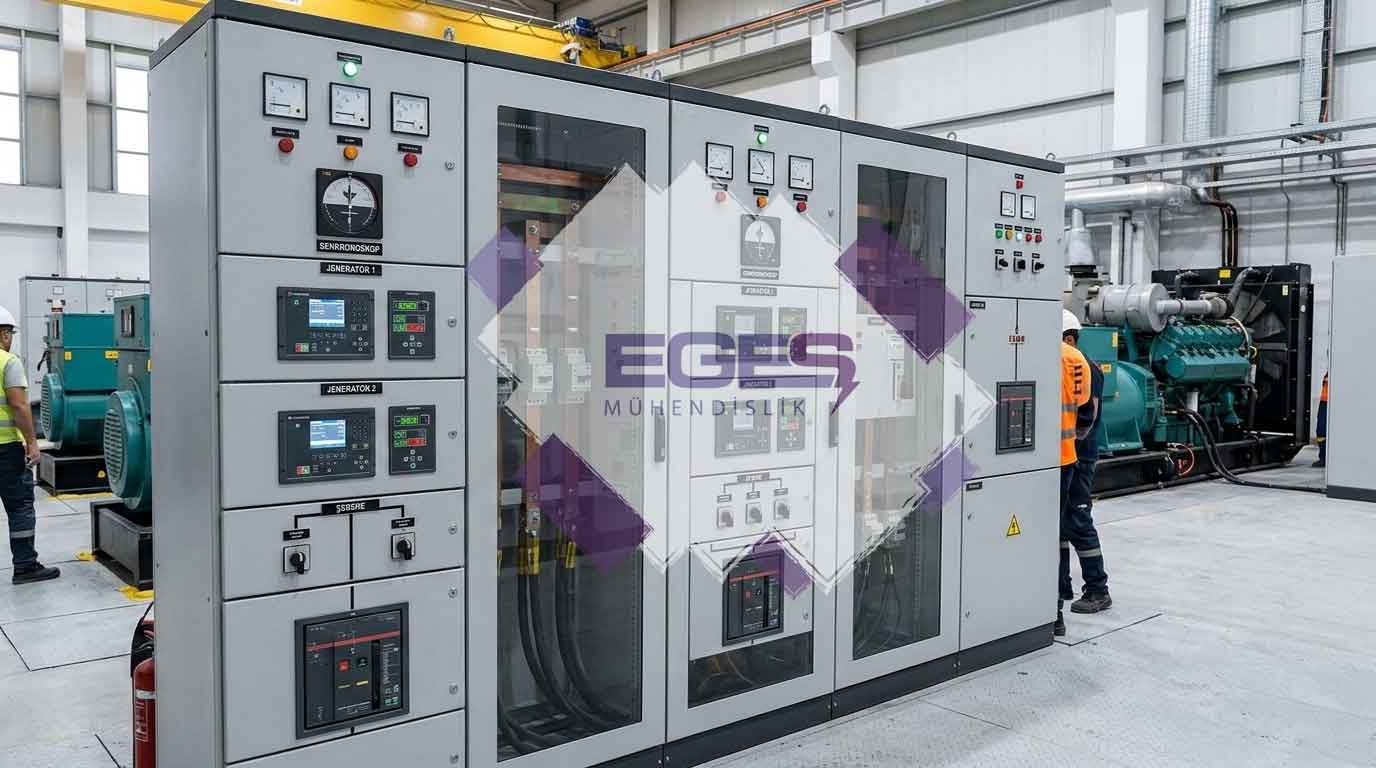
The uninterrupted, reliable, and efficient management of electrical energy is fundamental to every operation, from industrial facilities to commercial buildings. One of the most critical processes in this complex management is “synchronization” It is a process. So, as a technical term, what does “synchronized” mean, and why does it play a vital role in the world of electrical panels?
In this article, we will discuss the basic definition of synchronization, its application in electrical systems, and in particular Synchronization Panels We will examine how this process is managed through this method.
What Does "Synchronized" Mean? Basic Definition
The word “synchronized,” in the simplest terms, “simultaneous,” “occurring at the same time” or “in perfect harmony in terms of time and speed” means. It refers to a situation in which two or more events, processes, or devices operate in perfect coordination with one another, synchronizing within specified parameters.
Synchronization in Electrical Engineering: The Harmony of Powers
In electrical systems, synchronization comes into play especially when Alternating Current (AC) power sources (such as generators or different grid inputs) need to be connected in parallel. In this context, the answer to the question “What does ‘synchronized’ mean?” is more technical:
In electrical systems, synchronization is the process of precisely matching the voltage, frequency, phase angle, and phase sequence of two or more AC power sources.
If these four parameters do not match perfectly, the sources cannot be connected. An uncontrolled connection attempt can lead to high fault currents, equipment damage, system failures, and serious safety risks.
How Does Synchronization Work in Electrical Panels?
Electrical panels are control centers where this complex synchronization process is carried out automatically and safely. Panels specifically designed for this purpose Synchronization Panels ...is called.
Functions of the Synchronization Panel:
- Monitoring: The panel continuously measures and monitors the electrical parameters (voltage, frequency, phase) of the power sources to be connected in parallel (for example, Generator 1 and the grid).
- Comparison: Advanced synchronization relays or controllers compare data from various sources with one another.
- Adjustment (Regulation): If there is a difference between the parameters, the panel automatically adjusts the speed and voltage of the source that is about to come online (for example, a generator) to match the other source.
- Matching and Closing: At the moment of “synchronization,” when all parameters (voltage, frequency, phase angle) are aligned within the specified tolerances, the control panel automatically closes the switching device (circuit breaker) and connects the power sources in parallel.
- Load Sharing: Once the power sources are connected in parallel, the panel manages the efficient distribution of the connected load among the power sources based on their capacities.
Advantages and Applications of Synchronization Panels
Synchronization offers numerous advantages in energy management:
- Uninterrupted Power: In the event of a power outage, the generators come online in a synchronized manner and take over the load without causing any disruption. This is of vital importance in critical facilities (hospitals, data centers).
- Increased Capacity: Operating multiple small generators in sync offers a more flexible and cost-effective high-power solution than a single large generator.
- High Reliability and Backup: Even if one generator fails or is taken offline for maintenance, the other synchronized generators will continue to supply power to the system.
- Efficiency and Flexibility: The number of generators is automatically adjusted based on load demand, ensuring that the generators operate at their most efficient load point.
- Grid Parallel Operation: Factories or power plants can sell the energy they generate to the grid by synchronizing it with the grid, or they can draw power from the grid.
Key Areas of Application:
- Data Centers
- Hospitals and Healthcare Facilities
- Airports and Ports
- Large Industrial Facilities and Factories
- Power Generation Plants (Hydropower, Wind Power, Solar Power)
- High-Rise Commercial Buildings
Summary: Flawless Engineering and Trust
In the world of electrical panels, the answer to the question “What does ‘synchronized’ mean?” goes beyond simple coordination to encompass engineering precision and system safety. Synchronization panels are the technology that ensures energy sources are combined safely, efficiently, and without interruption. Thanks to these panels, modern facilities ensure energy continuity and minimize operational risks.
EGES Engineering, with its team of expert engineers and production that meets international standards, offers high-performance and reliable solutions tailored to your project Synchronization Panels designs and manufactures. Contact us to manage your energy with confidence.
 Turkish
  English
  German
  French
  Arabic
  Azerbaijani