
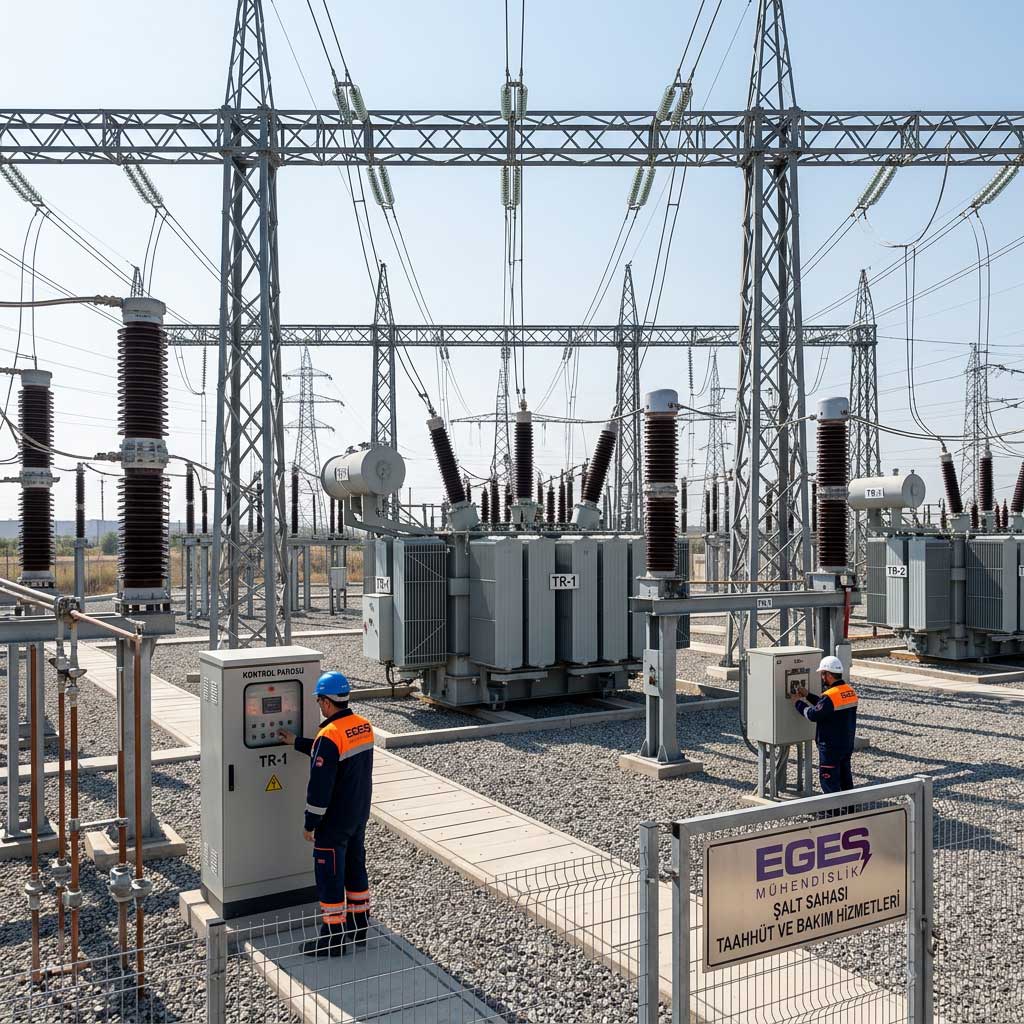
In the process of transmitting electrical energy from power plants to our cities, the massive facilities where the energy is routed, collected, and its voltage is adjusted are called switching yards. So, in technical literature, What is a switch? And what critical devices are used in these areas?
What Is a Switchgear? What Does "Electrical Switchgear" Mean?
First, let’s start with the definition of the term: What is a switch?? It has been borrowed into our language from the German word “Schalten” (to turn on and off). Electrical Switchgear In the field of electrical engineering, it is the general term for all components used to interrupt, control, or connect circuits. Everything from a small switch in our home to a massive circuit breaker is considered switchgear.
What Is a Switching Yard?
Well, What is a switchyard?? These are open or enclosed areas that connect the energy generated by power plants to transmission lines or control the flow of energy between transmission lines. These areas function like a “traffic control center,” ensuring that electricity is safely routed.
What Is Switchyard Equipment?
One switchyard It contains a variety of heavy industrial equipment that ensures the system's safety and control. The main pieces of equipment are as follows:
- Power Transformers: It is used to increase or decrease the voltage.
- Breakers: It is the most important safety component that safely interrupts the current under load in the event of a malfunction or during maintenance.
- Disconnectors: These are components that make it visually apparent that the circuit has been physically opened after the current has been interrupted.
- Bars: These are thick conductive pipes used to collect and distribute electrical energy.
- Measuring Transformers: It measures current and voltage values and transmits them to the devices in the control room.
- Signatures: It diverts electrical current to ground to protect the system during extreme voltage conditions, such as a lightning strike.
Types of Switchyards
Switchyards are classified into two categories based on their intended use and location:
- Open Switchyards (AIS): These are large areas where equipment is installed outdoors in airtight enclosures. They are generally preferred in areas where space is not an issue.
- Gas-Insulated Switchyards (GIS): These are systems in which equipment is placed inside tanks filled with a special gas ($SF_6$); they take up much less space and are installed in enclosed areas.
Why Is a Switching Yard Needed?
When a fault occurs at any point in the network, the affected area must be isolated to prevent the entire system from losing power. Here’s switchyard, is an engineering marvel that enables this isolation and allows the flow of energy to continue through alternative routes.


 Turkish
  English
  German
  French
  Arabic
  Azerbaijani