
What We Offer
Our load bank solutions
We support the testing processes for backup power systems in a wide range of facilities, from data centers to hospitals, and from industrial plants to power plants.
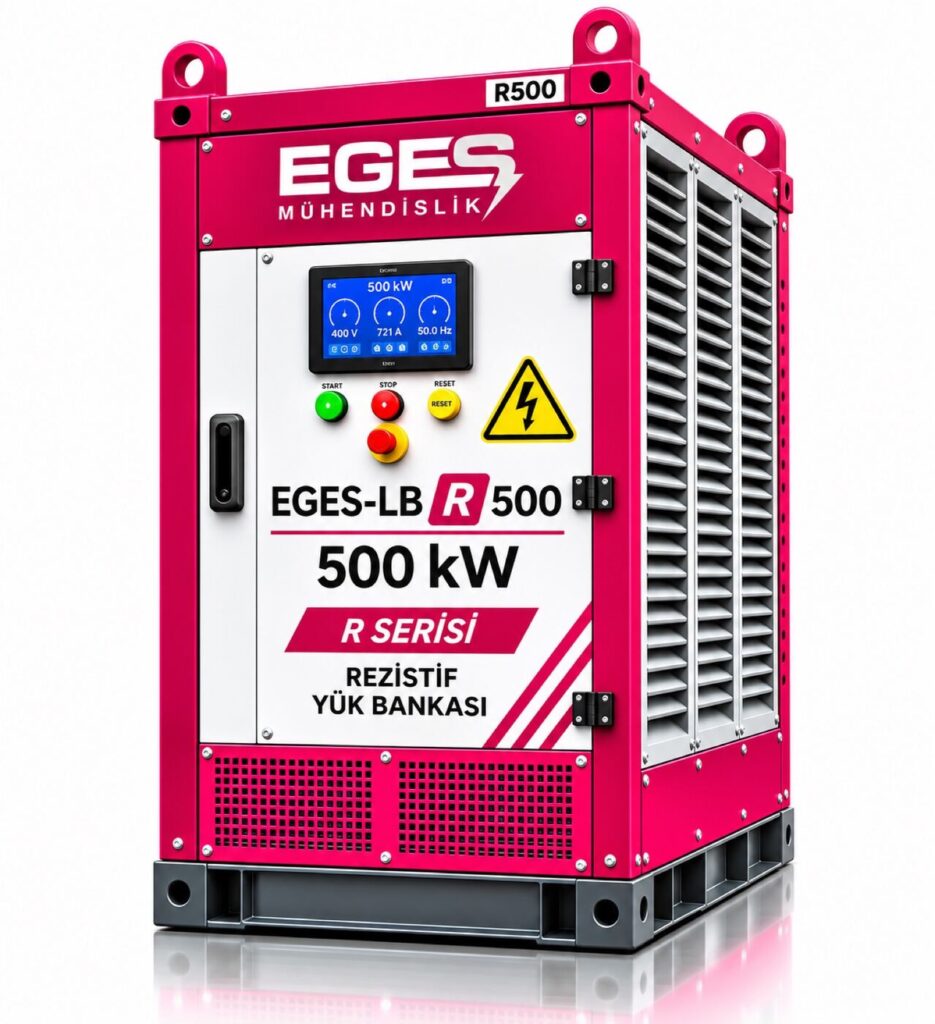
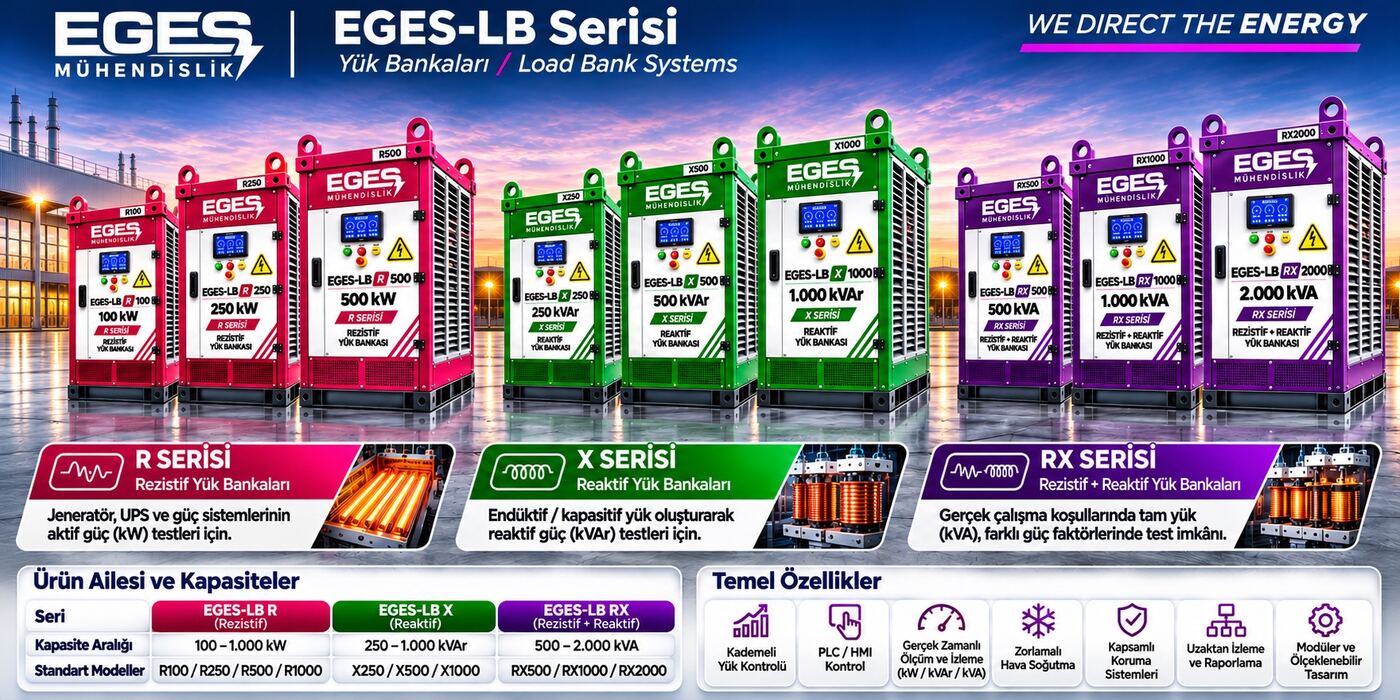
EGES-LB R Series
Resistive load banks: 100, 250, 500, and 1,000 kW models. Active load testing for generators and UPS systems.
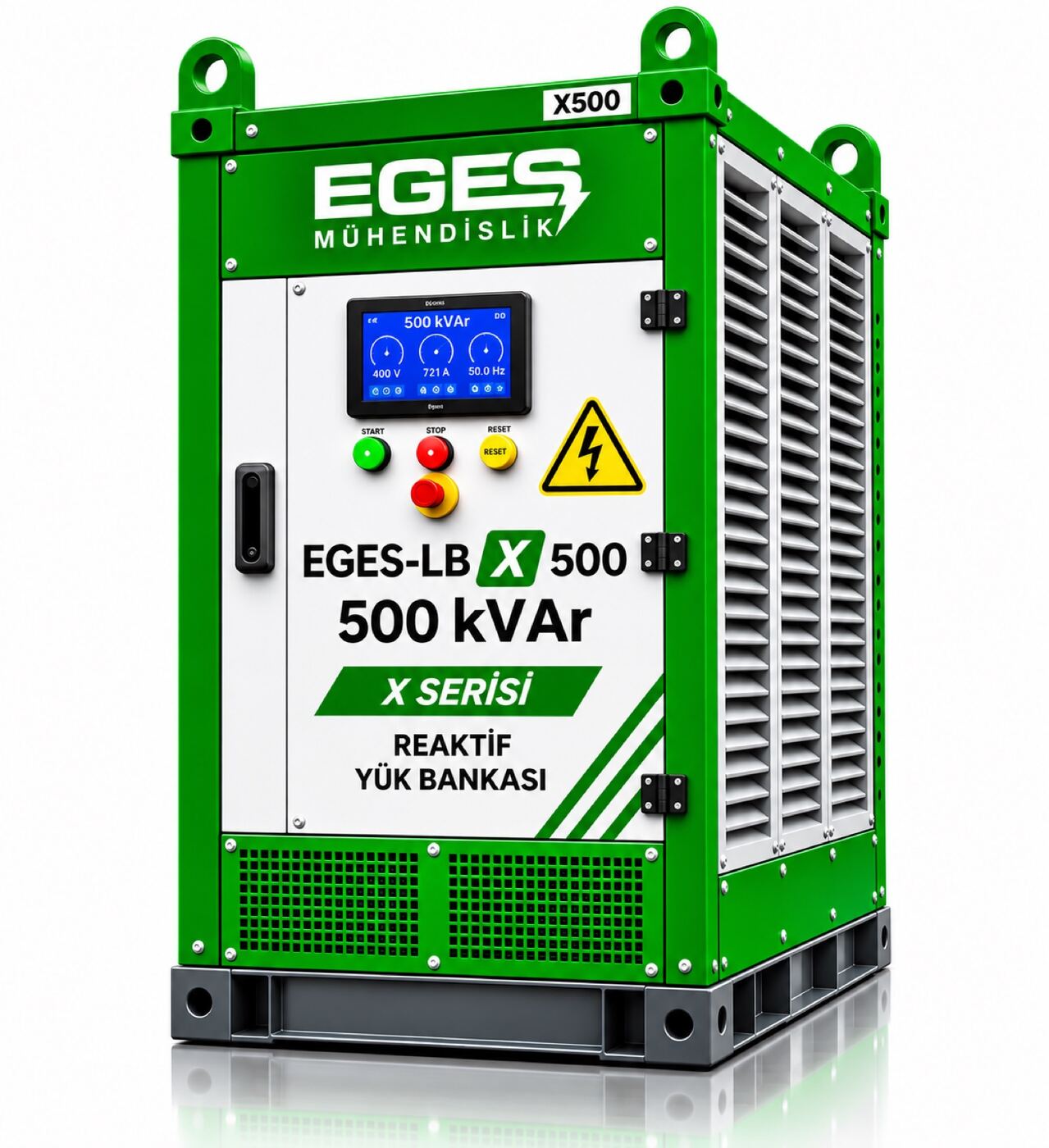
EGES-LB X Series
Reactive load banks: 250, 500, and 1,000 kVAr models. Reactive load and voltage regulation tests.
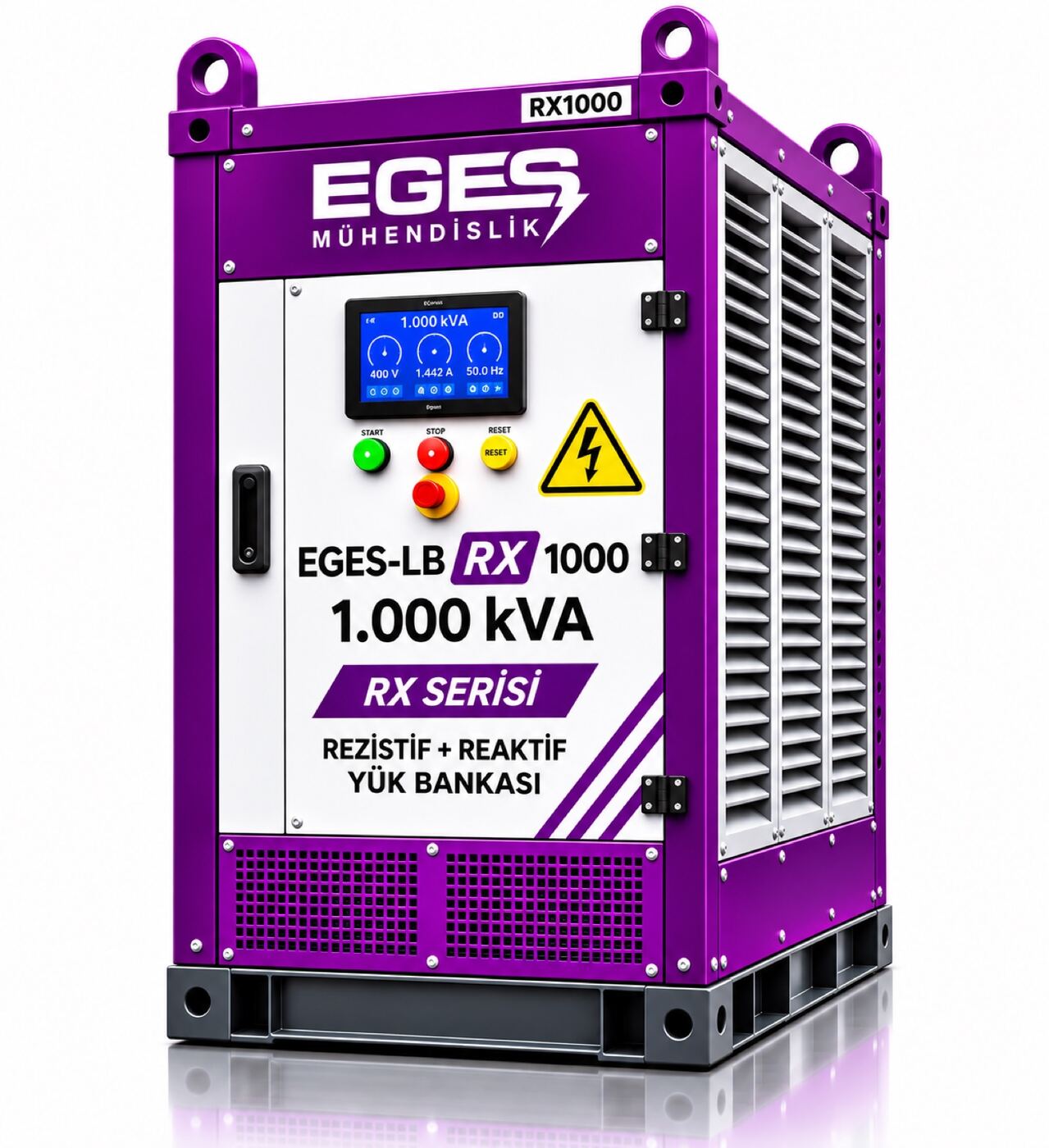
EGES-LB RX Series
Combined load banks: 500, 1,000, and 2,000 kVA models. Tests at various power factors.
EGES-LB CUSTOM
1,000 kW / kVAr and custom engineering for capacities exceeding 2,000 kVA in the RX series.
Planned Commissioning
Testing newly installed generator and UPS systems before they are put into service.
Maintenance and Troubleshooting
Early detection of performance and cooling issues that arise under load.
More information
About Load Banks and Generator Load Testing
A load bank is a test device that demonstrates how a power source behaves under load by consuming electrical energy in a controlled manner. Resistive load banks convert active power into heat using resistive elements and air cooling; reactive load banks create inductive or capacitive loads using reactors or capacitors.
Generator load testing is used during the acceptance of new installations, during periodic maintenance, and to verify that backup power systems at critical facilities are ready for use. It also helps remove combustion residues that accumulate in diesel generators operating at low loads for extended periods.
- An alternative to renting load banks
- Generator Load Testing and UPS Testing
- Resistive, reactive, and combined load banks
- Data Center and Hospital Backup Power Tests
Technical Approach
How does a load bank work?
The power supply to be tested is connected to the load bank using appropriate cabling and protective equipment, and the target load is applied gradually.
- Connection: Connecting the power supply to the load bank via wiring and protective measures
- Load selection: target active power, reactive power, or power factor
- Measurements: voltage, current, frequency, kW, kVAr, kVA, and power factor
- Energy management: resistive components convert active power into heat
- Evaluation: Examination of Stability and Responses Under Load
| R Series | 100 / 250 / 500 / 1,000 kW – resistive |
|---|---|
| X Series | 250 / 500 / 1,000 kVAr – reactive |
| RX Series | 500 / 1,000 / 2,000 kVA – resistive + reactive |
| Special | Over 1,000 kW / kVAr, RX: Over 2,000 kVA |
| Project parameters | Voltage, frequency, power factor, load steps, cooling, and ambient conditions are determined on a project-by-project basis |
| Note | Model names indicate the planned scope of the product family; final specifications are subject to project and engineering approval |
Process
From project to implementation
Link
Connecting the power supply to the load bank.
Load Selection
Determining the target kW, kVAr, or power factor.
Gradual loading
Step-by-step implementation of the task.
Measurement
Monitoring of electrical parameters.
Evaluation
Stability, voltage, and frequency response.
Reporting
Reporting of test results.
Applications
At which facilities?
Frequently Asked Questions
Frequently Asked Questions
What is a load bank used for?
It allows generators, UPS systems, and other power sources to be tested under a controlled and adjustable load without connecting them to an actual load.
What is the difference between a resistive and a combined load bank?
A resistive load bank draws only active power (kW). A combined (RX) load bank tests the generator at power factors close to actual operating conditions by applying both active and reactive loads simultaneously.
Which load bank should I use to test a 1,000 kVA generator?
A test at a power factor of 0.8 requires approximately 800 kW of active load and 600 kVAr of reactive load; a properly designed combined load bank must be selected for this test point. 1,000 kW, 1,000 kVA, and 1,000 kVAr are not interchangeable.
Related content
Information Center
What Are Current and Voltage? What Does "Synchronized" Mean? Measurement and Reporting OG Cells and Transfer SystemsRequest a quote for a load bank
Please let us know which power supply you’d like to test and your testing objectives; we’ll get back to you with the appropriate EGES-LB model.
 Turkish
 English
 German
 French
 Arabic
 Azerbaijani